CAPECITABINE TABLETS IP 500mg — PAS CAP
Product Overview — CAPECITABINE TABLETS IP 500mg (PAS CAP)
PAS CAP (Capecitabine Tablets IP 500mg) is an oral chemotherapy medication classified as a fluoropyrimidine carbamate, acting as a prodrug of 5-fluorouracil (5-FU). This targeted design allows PAS CAP to be selectively activated within tumor tissue, helping minimize systemic toxicity while delivering effective anticancer results.
The mechanism of CAPECITABINE TABLETS IP 500mg — PAS CAP disrupts DNA synthesis and RNA processing, ultimately leading to cancer cell death.
- Strengths Available: 150 mg & 500 mg
- Formulation: Film-coated tablets
- Marketed by: PASKLS Pharma
- Manufactured at: WHO-GMP Certified Facility, Himachal Pradesh, India

Therapeutic Indications
- Adjuvant therapy for Stage III colon cancer (alone or in combination).
- Perioperative treatment for locally advanced rectal cancer (with chemoradiotherapy).
- Unresectable/metastatic colorectal cancer (alone or in combination).
- Advanced/metastatic breast cancer when anthracycline/taxane not indicated.
- Combination with docetaxel after progression on anthracycline regimens.
- Unresectable/metastatic gastric, esophageal, or GEJ adenocarcinoma (in combination).
- HER2-positive gastric or GEJ adenocarcinoma (with trastuzumab).
- Adjuvant treatment in combination with gemcitabine.
Dosage & Administration of CAPECITABINE TABLETS IP 500mg — PAS CAP
PAS CAP (Capecitabine Tablets IP 500mg) should be administered orally twice daily (morning and evening) within 30 minutes after a meal. This ensures optimal absorption and minimizes gastrointestinal side effects.
The recommended treatment cycle for PAS CAP is 14 consecutive days on medication, followed by a 7-day rest period to allow patient recovery. The exact number of cycles depends on the cancer type, disease stage, and the oncologist’s recommendation.
Dose adjustments: In patients with renal impairment, PAS CAP dosage may need modification. For moderate impairment (creatinine clearance 30–50 mL/min), a ~25% dose reduction is usually required. PAS CAP is not recommended in severe renal impairment (creatinine clearance <30 mL/min).
Safety Information & Warnings — CAPECITABINE TABLETS IP 500mg (PAS CAP)
Storage & Packaging of CAPECITABINE TABLETS IP 500mg — PAS CAP
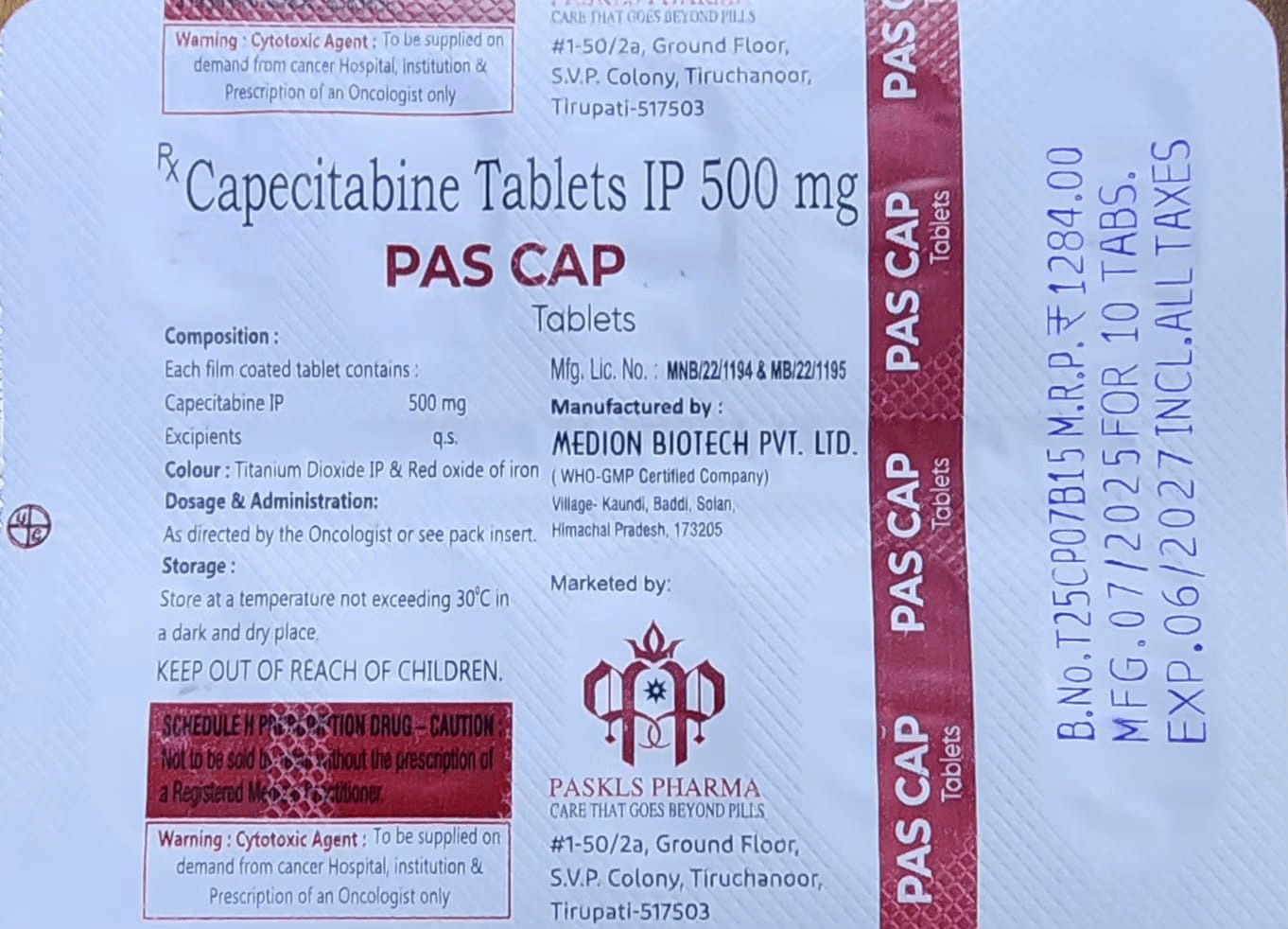
PAS CAP (Capecitabine Tablets IP 500mg) should be stored below 30°C, in a dry place, protected from sunlight and moisture.
The product is supplied in aluminium-aluminium blister packs for maximum protection of PAS CAP tablets.
Available in convenient pack sizes suitable for hospitals and clinics.
Shelf life: 24 months from the date of manufacture when stored correctly.
Usage Restriction: For hospital/registered medical practitioner use only – not for retail sale.
CAPECITABINE TABLETS IP 500mg — PAS CAP complies with WHO-GMP quality standards and Indian Pharmacopeia specifications.
Handling Instructions: Avoid direct contact with broken PAS CAP tablets. Wash hands thoroughly after handling.
Disposal Instructions: Dispose of unused or expired PAS CAP tablets according to local regulations. Do not flush into water systems.
Labeling: Each PAS CAP blister pack contains clear labeling including batch number, manufacturing date, expiry date, and dosage strength.
Transportation: Keep PAS CAP away from extreme temperatures and humidity during transit. Use appropriate packaging to prevent physical damage.
